

How to Offer Freelance Writing on Your Blog
If you already run a blog, you have something most freelance writers spend months trying to build from scratch: a public body of work, a way to demonstrate your voice, and a platform where potential clients can find you without any cold pitching at all. Turning that blog into a source of freelance writing clients is one of the most natural next steps for anyone who enjoys writing and wants to earn income directly from the skill, rather than only through ad revenue or affiliate links.
This guide covers how to structure your blog to attract freelance clients, what to include on a dedicated services page, how to price your work, and how to actually convert blog visitors into paying clients.
Why Your Blog Is Already a Freelance Writing Asset
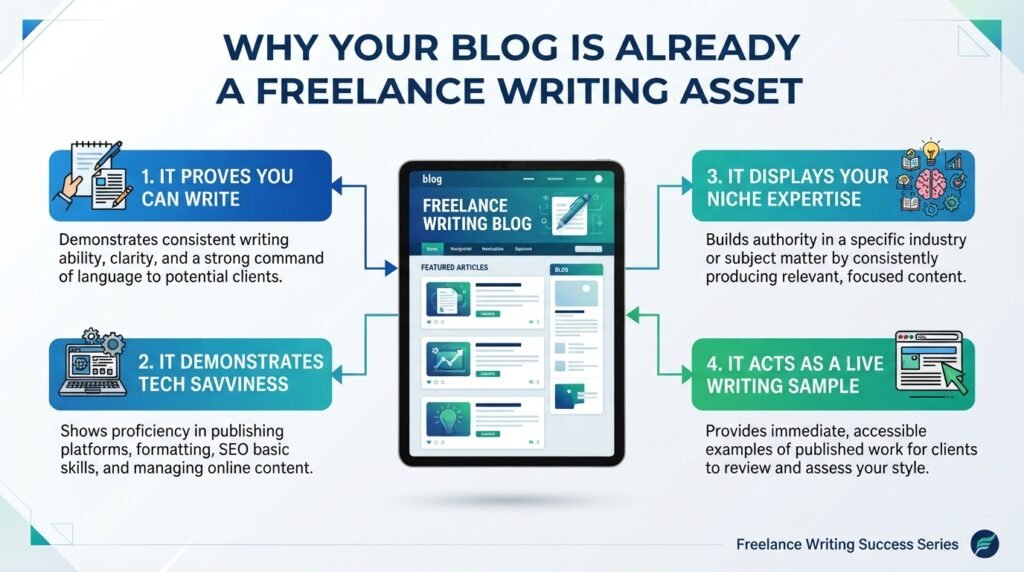
Many freelance writers spend significant time and money building a portfolio site from nothing. If you have an established blog, you already have real, dated, published examples of your writing across a range of topics. This is exactly what potential clients look for when evaluating a writer, since it shows you can consistently produce content, meet a level of quality, and write about a subject in depth.
Your blog also demonstrates something a plain portfolio site can’t: audience engagement. If your posts get comments, shares, or consistent traffic, that’s tangible proof that your writing resonates with real readers, which is valuable to any business hiring a writer to reach its own audience.
Instead of thinking of your blog and your freelance writing services as separate things, think of your blog as the top of a funnel that naturally leads readers toward hiring you.
Step One: Create a Dedicated Services Page
The single most important addition to your blog if you want to attract freelance clients is a clear, dedicated page describing your writing services. Many bloggers make the mistake of assuming an “about me” page is enough, but visitors interested in hiring a writer are looking for specific, actionable information, not just a personal story.
Your services page should clearly state what types of writing you offer, such as blog posts, email newsletters, product descriptions, or long form articles. It should describe the industries or topics you specialize in, since clients searching for a writer in a specific niche, such as finance, health, or technology, are more likely to reach out to someone who explicitly states experience in that area.
Include a short section on your process, covering how you handle research, drafts, and revisions, since this reassures potential clients that working with you will be organized and professional. Finally, include a clear call to action, such as a contact form or a direct email address, along with a note on your typical turnaround time and how to get a quote.
Step Two: Build a Focused Portfolio Section
Rather than linking to every post you’ve ever written, curate a portfolio section that highlights your strongest and most relevant work. If your blog covers several unrelated topics, group these examples by category so potential clients can quickly see relevant samples rather than sifting through everything you’ve published.
If you’ve ever guest posted on another site or contributed to a publication, include those links as well, since bylines outside your own blog often carry extra credibility with new clients. If you don’t have external bylines yet, that’s fine. Well written posts on your own blog are a completely legitimate substitute, especially early on.
Consider adding a short line beneath each portfolio piece explaining the goal of that post, such as driving organic traffic, explaining a complex topic simply, or persuading a reader to take an action. This small detail helps potential clients see that you write with strategy in mind, not just for the sake of writing.
Step Three: Write Content That Doubles as a Writing Sample
Once you know you want to attract freelance clients, treat every future blog post as a subtle audition. This doesn’t mean changing your voice or writing about topics you don’t care about. It means being intentional about demonstrating a range of skills across your regular content, such as clear explanations, persuasive calls to action, structured how to guides, and engaging storytelling.
If you notice your blog leans heavily toward one style, such as only personal narrative posts, consider adding a few structured, informative posts as well, since many freelance clients are hiring for practical business writing rather than personal essays. A blog that shows range gives potential clients more confidence that you can adapt to their specific needs.
Step Four: Make It Easy to Find Your Services
Even a strong services page won’t generate leads if visitors never see it. Add a clear link to your services page in your main navigation menu, and consider adding a short call to action at the end of relevant blog posts, inviting readers to learn more about hiring you if they enjoyed the article they just read.
A simple line such as “If you enjoyed this post and need a writer for your own blog or business, learn more about working with me” placed naturally at the end of your content can generate steady interest without feeling like an aggressive sales pitch. You can also add a small sidebar widget or banner mentioning your services, as long as it doesn’t distract from the reading experience.
Step Five: Set Clear, Confident Pricing
Pricing is often the part new freelance writers struggle with most, and blog owners are no exception. There are a few common ways to price freelance writing work, and understanding them will help you choose the option that fits your niche and experience level.
Per word pricing is common for straightforward content and typically ranges quite widely depending on niche and experience, with specialized or highly technical writing commanding significantly more than general content. Per project pricing, where you quote a flat fee for a specific piece such as a blog post or email sequence, is often preferred by clients because it removes uncertainty about the final cost. Hourly pricing is less common in freelance writing but can work well for ongoing consulting style work, such as content strategy sessions.
Whatever pricing model you choose, state it with confidence on your services page or be prepared to share it clearly when a potential client reaches out. Vague or hesitant pricing signals inexperience, while clear pricing signals that you run your writing as a real business.
Step Six: Handle Inquiries Professionally
When someone reaches out through your blog wanting to hire you, respond promptly and professionally, ideally within one business day. Ask clarifying questions about their goals, target audience, and any existing content guidelines they follow, since understanding their needs deeply is what separates writers who get repeat work from those who don’t.
Provide a simple, clear proposal outlining what you’ll deliver, your timeline, and your price, and consider using a simple contract template for any project beyond a single short piece, since this protects both you and the client from misunderstandings about scope or payment terms.
Step Seven: Use Your Own Blog as Ongoing Proof
As you take on freelance clients, continue publishing regularly on your own blog, since consistent output reinforces to future prospects that you are an active, reliable writer rather than someone who only writes occasionally. If clients allow it, consider writing case study style posts about successful projects, without revealing confidential details, since real world results are one of the most persuasive things you can show a potential client.
Over time, your blog becomes not just your writing portfolio but also your ongoing marketing engine, continuously demonstrating your skill and attracting new inquiries without requiring you to pitch cold prospects constantly.
Final Thoughts
Turning your blog into a source of freelance writing clients doesn’t require a complete redesign or a separate website. It requires a clear services page, a focused portfolio, intentional content that shows range, easy to find calls to action, and confident pricing. Because your blog already demonstrates your voice and consistency, you have a significant head start over freelancers building a portfolio from nothing. With a few structural changes and consistent effort, the blog you already maintain can become one of your most reliable sources of freelance writing work.