
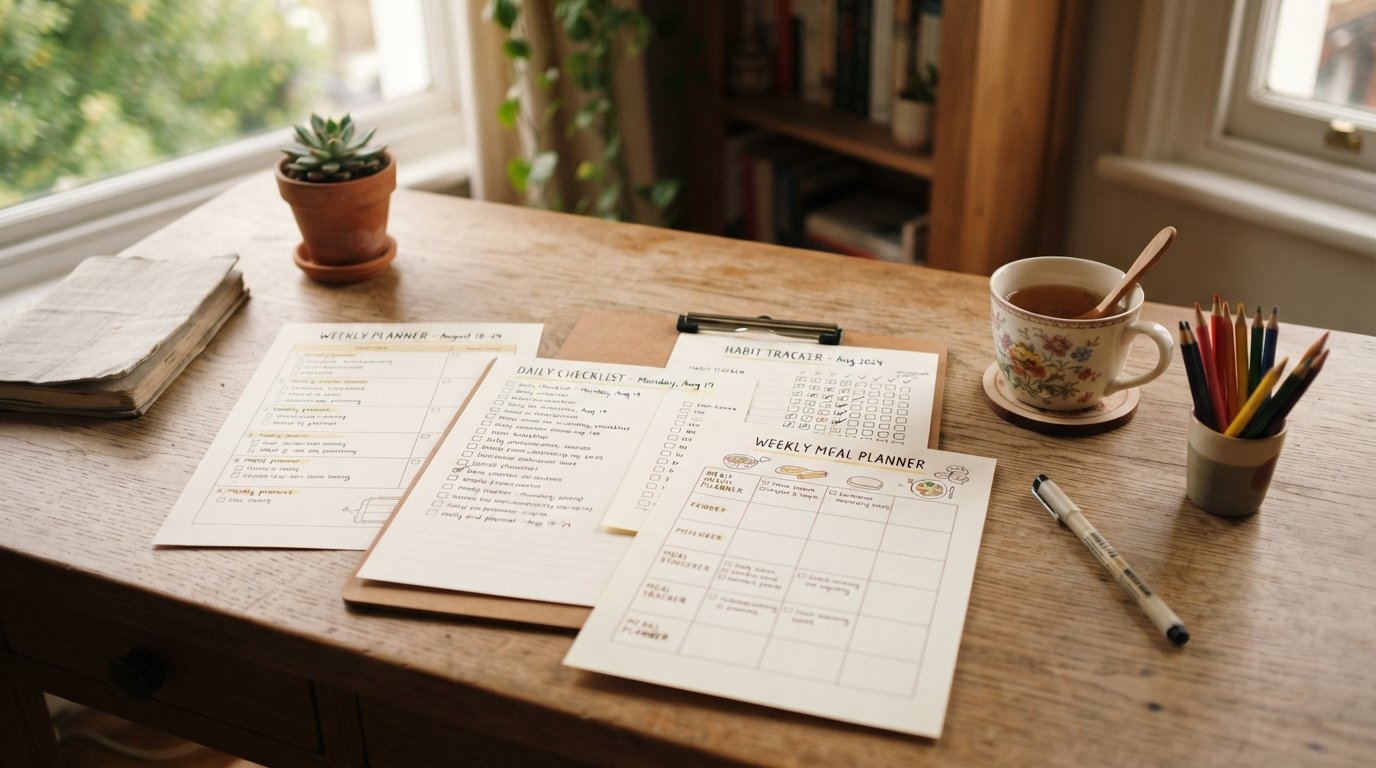
5 Printables You Can Create in One Afternoon
Printables have become one of the most approachable ways to earn passive income online. They require no inventory, no shipping, and no advanced design software. A buyer purchases a digital file, prints it at home or at a local print shop, and uses it immediately. Because the barrier to entry is so low, printables are one of the fastest digital products you can go from idea to finished file with, often in a single afternoon.
Below are five printable ideas that are simple enough to complete in just a few hours, along with practical guidance on how to make each one and what makes it appealing to buyers.
1. Weekly Meal Planner
Meal planners are consistently one of the best selling printable categories, since so many people struggle with the same weekly question of what to cook and how to organize a grocery list around it.
A strong meal planner includes a simple weekly grid with space for breakfast, lunch, and dinner across seven days, a section for snacks if relevant, and an attached grocery list organized by category such as produce, dairy, and pantry items. Some of the most popular versions also include a small notes section for meal prep reminders or leftover tracking.
To build this in an afternoon, open a design tool like Canva, which offers free planner templates you can customize with your own fonts, colors, and layout tweaks. Focus on making the grid easy to read and leaving enough writing space in each box, since printables that feel cramped are far less likely to get repeat use. Export it as a high resolution PDF sized for standard letter paper, and consider offering both a colorful version and a minimalist black and white version to appeal to different tastes.
What makes this printable sell well is specificity. A generic meal planner competes with hundreds of others, but a meal planner designed for a particular audience, such as busy parents, people cooking for one, or anyone following a specific diet style, stands out and can often be priced slightly higher.
2. Budget Tracker
A monthly budget tracker is another evergreen category, since managing money is a near universal challenge and many people prefer a simple paper based system over complicated budgeting apps.
The core elements of a strong budget tracker include a monthly income section, a list of fixed expenses like rent and utilities, a variable expenses section for things like groceries and entertainment, and a simple savings or debt payoff tracker. Many popular versions also include a small habit tracker for financial goals, such as marking off days where no unnecessary purchases were made.
Building this printable is quick because the layout is mostly tables and simple checkboxes rather than complex graphics. Use a clean, professional font and a simple two or three color palette so it looks trustworthy rather than cluttered. Once your layout is finalized in Canva or a similar tool, export it as a printable PDF, and consider creating a companion debt payoff tracker or savings goal tracker as a small bundle, since bundles often sell better than single sheet printables.
Budget trackers do particularly well when they feel encouraging rather than clinical. Adding small motivational touches, like a spot to write a savings goal or celebrate progress milestones, makes the tracker feel more personal and increases the chance a buyer actually uses it consistently.
3. Habit Tracker
Habit trackers remain popular because they tap into a simple, satisfying behavior: marking off a box every day a habit is completed. They work well as standalone printables or as part of a larger planner bundle.
A basic habit tracker includes a monthly calendar grid, a list of habits down one side, and small boxes to check off each day a habit is completed. More detailed versions include a mood tracker, a water intake tracker, or a small reflection section at the end of the month.
This printable is especially quick to design because it relies heavily on a repeating grid structure. Once you build the first row or column, duplicating it across the page takes only a few minutes. Focus on clear labeling and enough space for people to write in specific habits themselves, since a rigid tracker with preset habits appeals to a smaller audience than one that lets buyers customize which habits they’re tracking.
To make this printable stand out, consider designing it around a specific theme, such as fitness habits, reading habits, or habits for a specific season, like a “back to school” routine tracker. Themed trackers often perform better in search results and marketplaces than generic ones, since buyers are frequently searching for something tailored to their current goal.
4. Chore Chart for Kids or Families
Chore charts are a reliable seller in the parenting and household organization niches, since many families are looking for a simple visual system to encourage kids to complete regular tasks.
A well designed chore chart typically includes a weekly grid with chores listed down one side and days of the week across the top, space to mark completion with a checkmark or sticker, and sometimes a small rewards section where kids can track points earned toward a prize or privilege. Versions designed for younger children often use bright colors and simple icons next to each chore, while versions for teenagers tend to use a cleaner, more mature layout.
This is a fast printable to design because the structure mirrors a habit tracker, just reframed for a family context. If you’re targeting younger children, spend extra time selecting playful but not overly busy icons, since visual clarity matters more than decoration for this audience. If you’re targeting a broader parenting audience, consider offering an editable version where parents can add their own chores and children’s names, since customization is a major selling point in this category.
Bundling a chore chart with a simple reward chart or allowance tracker often increases perceived value, since parents managing chores are frequently also managing allowance and rewards simultaneously.
5. Daily or Weekly Planner Page
A simple daily or weekly planner page is one of the most versatile printables you can make, appealing to students, professionals, and anyone who prefers paper planning over digital calendars.
A solid daily planner page includes space for the date, a prioritized to do list, a schedule broken into hourly or half hourly blocks, and a small notes section. A weekly version condenses this into a single page with each day represented as a smaller column or block, often paired with a weekly goals or priorities section at the top.
This printable is quick to build because it relies on clean lines, simple typography, and a functional grid rather than heavy graphics. Focus on leaving enough white space so the page doesn’t feel overwhelming, and consider offering multiple layout styles, such as an hourly schedule version and a simple checklist version, to appeal to different planning preferences.
What separates a generic planner page from one that sells consistently is a clear sense of who it’s for. A planner designed specifically for students managing coursework, freelancers managing client work, or parents managing a household schedule will resonate more strongly than an unlabeled generic template, even if the underlying structure is similar.
Tips That Apply to All Five
Across all of these printables, a few practices consistently improve both the quality of the final product and how well it sells.
Design for both color printing and black and white printing, since many buyers print at home using standard ink and appreciate having an ink saving version available. Export your final files as high resolution PDFs sized for standard letter paper, and check that text remains sharp and readable when printed at actual size rather than only looking good on screen.
Consider creating a small bundle once you have a few printables in a related category, such as a full household organization bundle combining a meal planner, budget tracker, and chore chart, since bundles often earn more per sale than individual printables while requiring only slightly more work to assemble.
Finally, write a clear, benefit focused product description when you list each printable for sale, explaining exactly what problem it solves and who it’s designed for, since a compelling description often influences a purchase decision more than the visual design itself.
Final Thoughts
Printables are one of the most accessible digital products to create, and the five ideas above can each realistically be designed, polished, and ready to sell within a single afternoon. The key to success isn’t complexity, it’s clarity. A simple, well organized printable that solves a specific problem for a specific audience will almost always outperform an elaborate one that tries to be everything to everyone. Start with one idea from this list, keep the design clean, and you’ll have a sellable product well before the day is over.