
Top 10 Tools to Grow Your First Website in 2026
Launching your first website is an exciting milestone, but getting that website in front of real people and turning visitors into loyal readers or customers is where the real work begins. The internet in 2026 is more competitive than ever, and simply publishing content is no longer enough. You need the right combination of tools to help you understand your audience, improve your visibility, speed up your site, and keep visitors coming back.
In this article, we will walk through ten essential tools that can help any beginner grow a website in 2026. Whether you are running a blog, an online store, or a small business site, these tools cover the core areas every website owner needs to focus on: analytics, search visibility, speed, design, email marketing, security, and content creation.
1. Google Analytics 4
Understanding your audience is the foundation of growth, and Google Analytics 4 remains one of the most powerful free tools available for this purpose. It allows you to track where your visitors come from, which pages they spend the most time on, what devices they use, and where they drop off before completing a goal such as a purchase or signup.
For a new website owner, Google Analytics 4 offers a clear picture of what is working and what needs improvement. Instead of guessing which content resonates with your audience, you can rely on real data to guide your next steps. Setting it up early, even before your traffic numbers are impressive, means you will have historical data to compare against as your site grows.
2. Google Search Console
While analytics tells you what happens after someone lands on your site, Google Search Console tells you how your site performs directly within search results. This tool shows which keywords bring visitors to your pages, how often your pages appear in search results, and your average position for specific search terms.
Google Search Console also alerts you to technical issues such as crawl errors, mobile usability problems, or pages that have been removed from search results. For anyone serious about search engine optimization, this tool is not optional. It is one of the clearest ways to see how search engines actually view your website.
3. Ahrefs or Semrush for SEO Research
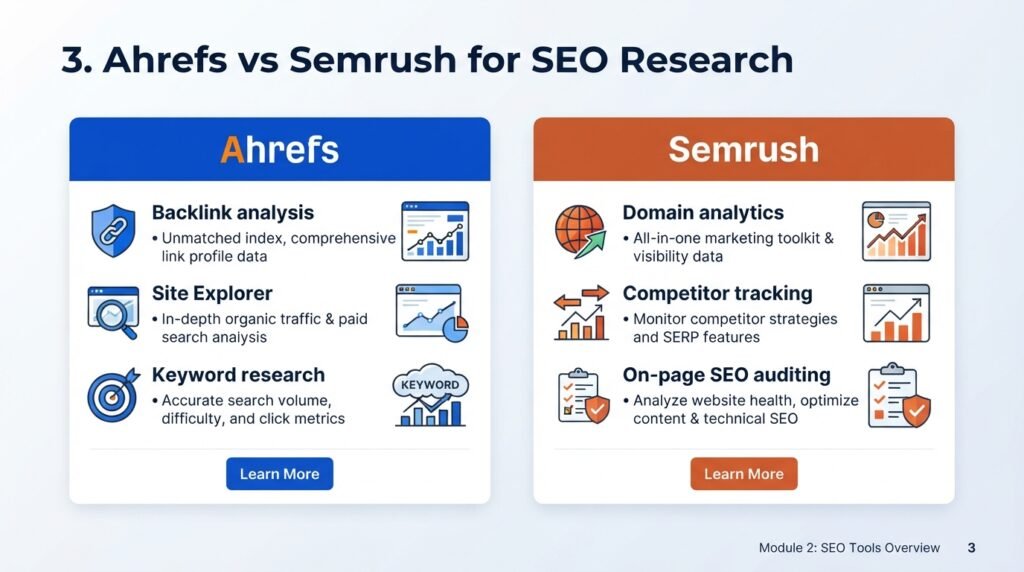
Search engine optimization tools like Ahrefs and Semrush have become essential for website owners who want to compete for visibility in search results. These platforms let you research keywords, analyze competitor websites, track your search rankings over time, and identify backlink opportunities.
For a beginner, the keyword research feature alone can transform your content strategy. Instead of writing articles based on guesswork, you can identify what your target audience is actually searching for and create content that answers those specific questions. Both platforms offer paid plans, but even a basic subscription can dramatically improve your understanding of the competitive landscape.
4. Canva for Visual Content
Visual content plays a major role in keeping visitors engaged, whether that means blog graphics, social media images, or simple infographics that explain complex topics. Canva has grown into one of the most accessible design tools available, allowing anyone without a design background to create professional looking visuals in minutes.
With thousands of templates, an easy drag and drop editor, and built in brand kits, Canva makes it simple to maintain consistent visual branding across your website and social channels. For a new website owner working with a limited budget, this tool removes the need to hire a designer for every small graphic.
5. WordPress or a Modern Website Builder
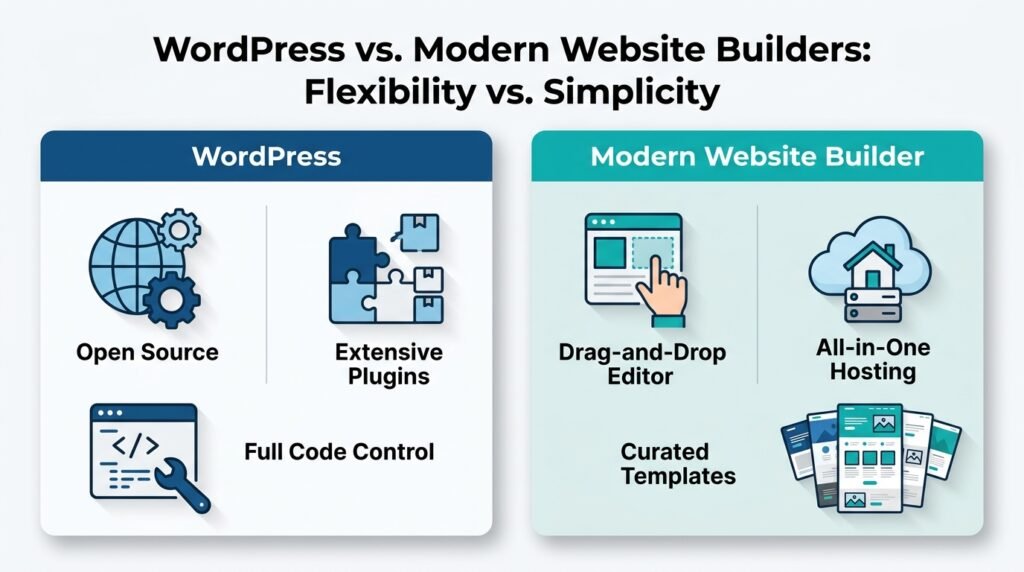
If your website is not already built on a strong foundation, choosing the right platform is critical to future growth. WordPress continues to power a significant portion of websites worldwide because of its flexibility, massive plugin ecosystem, and strong community support.
Alternatively, modern website builders offer simplified, visual editing experiences that are ideal for beginners who want a clean, professional site without dealing with code. Whichever platform you choose, look for one that supports fast loading times, mobile responsiveness, and easy integration with the other tools on this list.
6. Mailchimp or ConvertKit for Email Marketing
Building an email list remains one of the most reliable ways to grow a website because it gives you direct access to your audience without relying on algorithms or search rankings. Tools like Mailchimp and ConvertKit make it easy to create signup forms, design email newsletters, and automate follow up sequences for new subscribers.
Email marketing is particularly valuable for websites focused on content or ecommerce, since it allows you to bring visitors back to your site repeatedly rather than hoping they return on their own. Starting an email list early, even with a small number of subscribers, sets the stage for long term audience growth.
7. Yoast SEO or Rank Math
If your website runs on WordPress, an on page SEO plugin such as Yoast SEO or Rank Math can guide you through optimizing individual pages and posts. These tools analyze your content in real time and offer suggestions related to keyword usage, readability, meta descriptions, and internal linking.
For beginners who are unfamiliar with the technical side of search engine optimization, these plugins act almost like a personal SEO coach, walking you through best practices every time you publish new content. Over time, this consistent optimization can meaningfully improve your search visibility.
8. GTmetrix or PageSpeed Insights
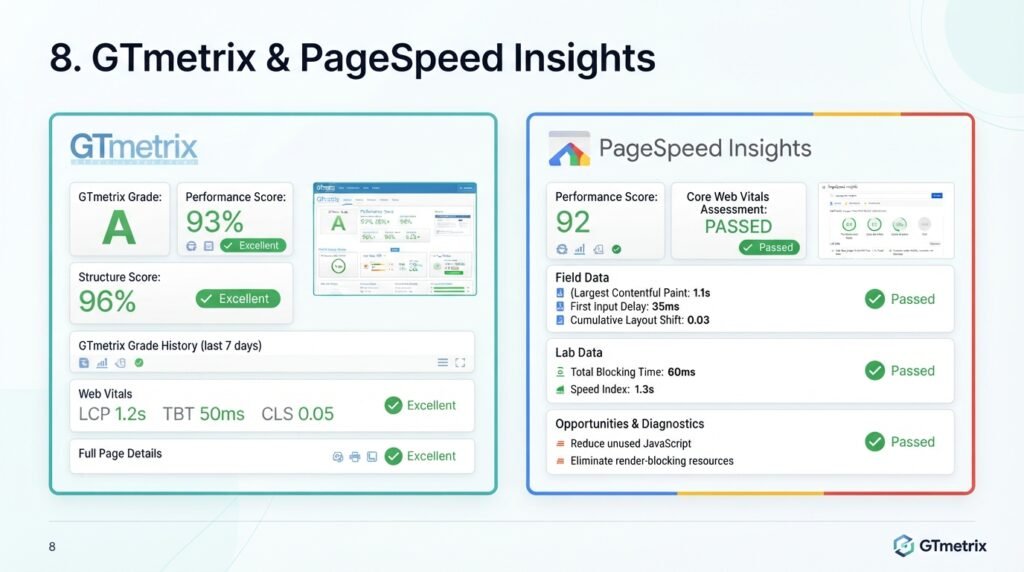
Website speed directly affects both user experience and search rankings, making performance testing tools essential for growth. GTmetrix and Google PageSpeed Insights analyze how quickly your website loads and identify specific issues slowing it down, such as unoptimized images, excessive scripts, or slow server response times.
A slow website leads to higher bounce rates, meaning visitors leave before your content even loads. Regularly testing your site with these tools and addressing the recommendations they provide can lead to noticeably better user retention and improved search performance.
9. Hotjar for User Behavior Insights
While analytics platforms show you numbers, tools like Hotjar show you actual user behavior through heatmaps and session recordings. You can see exactly where visitors click, how far they scroll, and where they seem to get confused or lose interest.
This kind of qualitative insight is incredibly valuable for improving website design and layout. Instead of assuming why a page is not performing well, you can watch real user sessions and identify the exact friction points causing visitors to leave.
10. Cloudflare for Security and Performance
As your website grows, so does its exposure to security threats and increased traffic demands. Cloudflare offers a combination of security features and performance improvements, including protection against malicious traffic, a content delivery network that speeds up loading times globally, and free SSL certificates to keep your site secure.
For a new website owner, setting up Cloudflare early can prevent future headaches related to downtime, slow loading speeds for international visitors, or vulnerability to common cyber threats. It is a foundational tool that supports long term stability as your audience expands.
Bringing It All Together
Growing a website in 2026 requires more than good content alone. It requires a thoughtful combination of analytics, search visibility, design, communication, and technical performance. The ten tools covered in this article each address a different piece of that puzzle, and together they form a solid toolkit for any beginner looking to build sustainable, long term growth.
You do not need to implement every tool on this list immediately. Start with the fundamentals such as Google Analytics 4 and Google Search Console to understand your current position, then gradually add tools for design, email marketing, and performance as your website matures. Growth is rarely instant, but with the right tools guiding your decisions, every step becomes more informed and more effective.